22: BLESSING IN DISGUISE (TURNING HARM INTO GOOD)
Blessing in Disguise (Turning Harm into Good) is the practice of turning a harmful effect (or an unwanted by-product) into a useful resource. Instead of spending effort to eliminate heat, noise, vibration, waste, contamination, friction, or 'undesired side effects,' you redesign the system so that the same effect performs a useful function—making the contradiction disappear because the 'problem' becomes part of the solution.
This principle is expressed in three common moves:
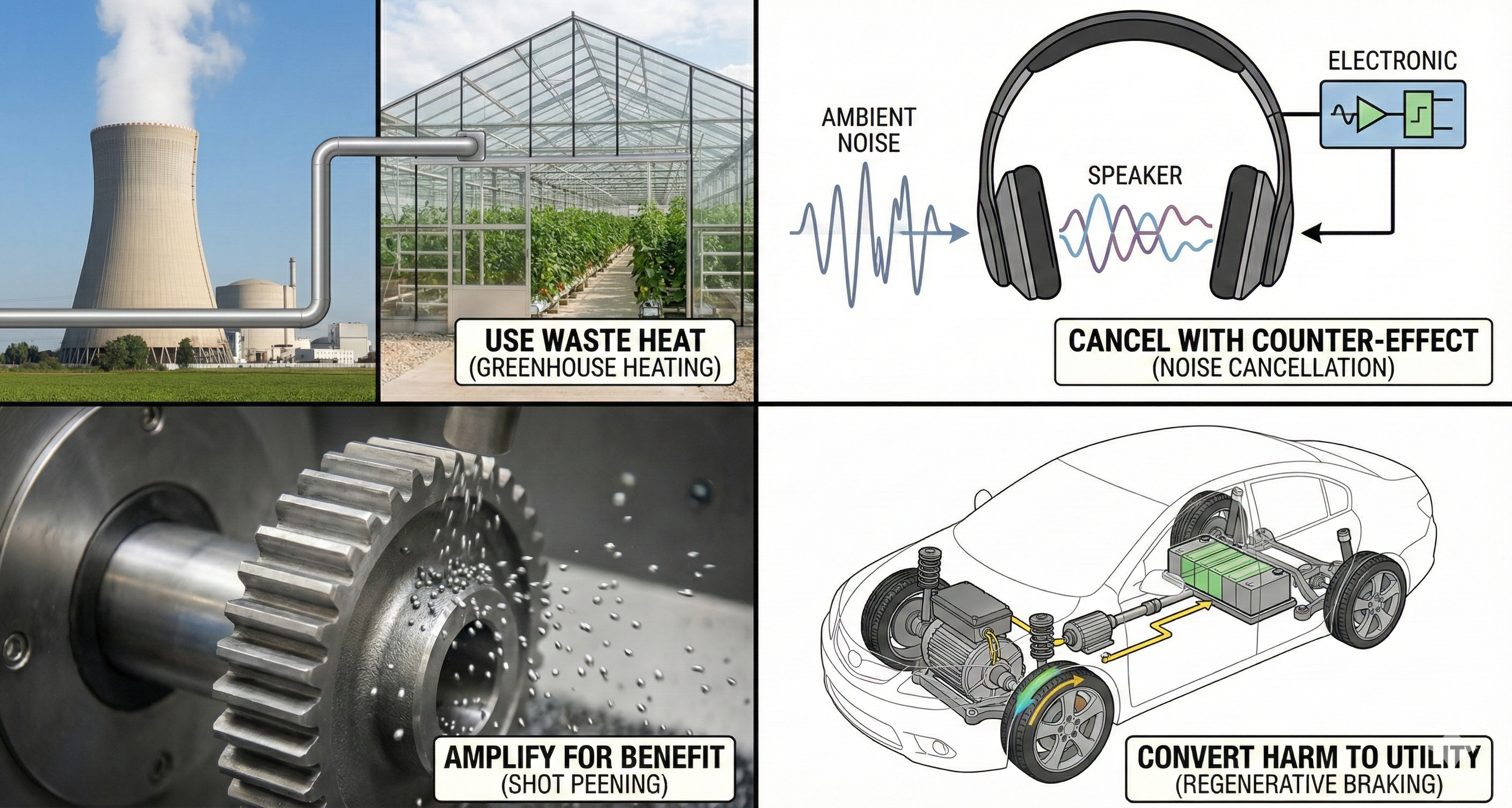
Use the harmful factor to achieve a useful result (e.g., use waste heat for heating, vibration for conveying, pressure spikes for cleaning);
Eliminate a harmful effect by combining it with another effect so they cancel/neutralize each other (counter-effects, balancing, self-correction);
Intentionally amplify or introduce a harmful factor in a controlled way to get a net benefit; use it as a tool, not as a nuisance;
Why "Blessing in Disguise" creates innovation?
When you convert harm into utility, you unlock multiple advantages at once: